DG-Corrology (ICDA)
DG-ICDA Overview
Internal corrosion direct assessment methodology for pipelines carrying normally dry natural gas (DG-ICDA) – SP0206, is a standard published by AMPP (formerly NACE) to serve as guide to enhance the assessment of internal corrosion in natural gas pipelines, and to ensure pipeline integrity, particularly on pipe segments where alternative methods (e.g., in-line inspection (ILI), hydrostatic testing, etc.) may not be practical.
This standard, as defined, is a structured integrity assessment methodology used to identify and evaluate internal corrosion threats in natural gas pipelines that normally carry dry gas, but may suffer from infrequent, short-term upsets of liquid water.
Note that DG-ICDA is not applicable to wet gathering, or pipelines where water vapor condensation occurs at locations along the length of the pipeline – assessment should be carried out in accordance with NACE SP0110, Wet Gas Internal Corrosion Direct Assessment Methodology for Pipelines when water condensation occurs or is expected to occur.
The DG-ICDA process consists of four key steps:
- Pre-Assessment
- Collect essential history and operational data.
- Evaluate applicability of DG-ICDA.
- Identify DG-ICDA regions.
- Indirect Inspection
- Perform multiphase flow modeling.
- Develop the pipeline inclination profile.
- Identify locations where water accumulation and internal corrosion may be present.
- Detailed Examinations
- Conduct field inspections at selected locations.
- Perform detailed examinations.
- Assess overall condition of the DG-ICDA region.
- Post-Assessment
- Evaluate effectiveness of the DG-ICDA process.
- Establish reassessment intervals.
DG-Corrology® Model
A model (DG-Corrology®) based on DG-ICDA methodology has been developed to support DG-ICDA Step 2 – Indirect Inspection assessments. The model integrates multiphase flow modeling, critical inclination angle calculations, and the generation of pipeline inclination profile to identify locations where water accumulation and internal corrosion may occur.
In addition, an integrated corrosion module is employed to quantify corrosion rates based on operating conditions and fluid composition, enabling operators and engineers to efficiently assess corrosion risk and overall system aggressiveness.

Figure 1 High-level flowchart of the DG-Corrology model.
Tools
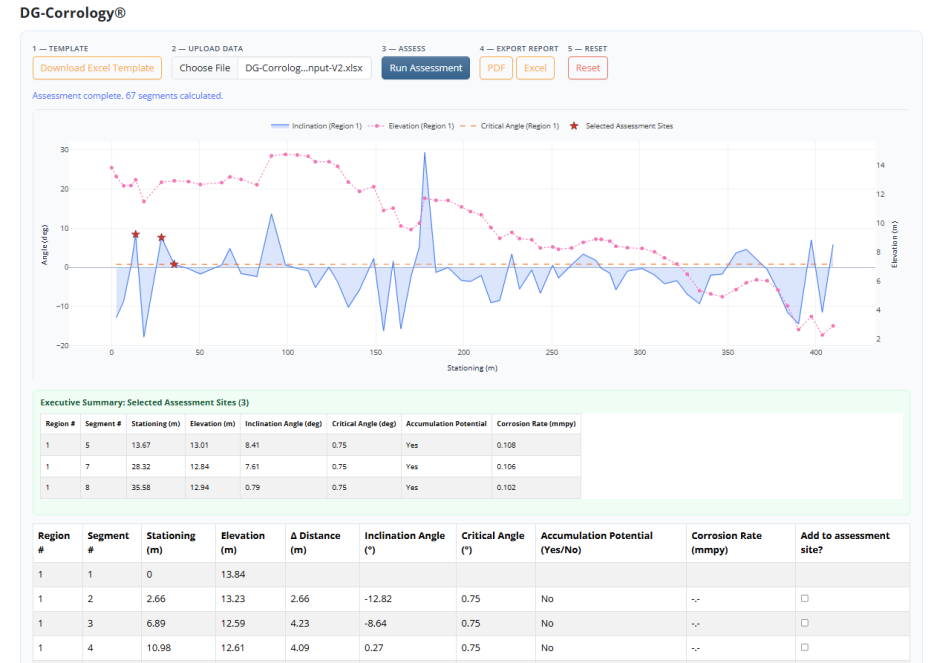
Below is a user-friendly DG-ICDA tool that enables systematic assessment of internal corrosion in normally dry gas pipelines by incorporating key parameters such as operating conditions, gas composition, pressure, temperature, and pipeline profile. The tool evaluates the potential for liquid dropout and identifies locations susceptible to corrosion based on DG-ICDA principles.
How to Use the DG-ICDA Assessment Tool
Follow the steps below to perform the DG-ICDA indirect inspection assessment:
- Click Download Excel Template and complete the workbook.
- Use the required sheets for calculation:
- Region_Data (or PipelineInput): region operating conditions (pressure, temperature, flow rates, gas composition, water chemistry).
- Segment_Profile_Data (or SegmentationInput): pipeline distance and elevation profile.
- Project_Information: optional; retain for project metadata.
- Click Upload Data and select the completed Excel file.
- Click Run Assessment to execute the DG-ICDA / DG-Corrology® calculations.
- Review results in three views:
- Pipeline Profile Chart: interactive chart showing inclination angle, elevation, and critical angle vs. distance.
- Executive Summary: selected assessment sites only.
- Full Results Table: all segments with accumulation potential and corrosion rate.
- Select assessment sites using the checkbox column. Selected sites are highlighted on the chart and listed in the Executive Summary.
- Click PDF or Excel to export. The PDF includes the chart and Executive Summary first, followed by the full results table on new pages.
To Obtain Access to the ICDA Assessment Tool please upgrade your subscription to Advanced Tier .
References
Paid Subscribers can have access to the list of references.